

About Virtonomy
Virtonomy is a German MedTech company based in Munich that helps manufacturers of cardiovascular medical devices accelerate development and clinical evidence with digital patient twins and in silico simulations, and to identify risks earlier. The browser-based v-Patients platform combines virtual patient cohorts, anatomical analyses, virtual implantation, simulation, and regulatory-oriented documentation in a single workflow—from early design questions to the preparation of regulatory evidence.
This enables development teams to investigate their devices virtually across anatomically diverse patient groups before moving into costly physical testing or clinical trials. The goal: better decisions earlier in the development process, shorter iteration loops, and more robust evidence of safety and performance.
Trusted by teams at leading medtech companies


Virtonomy at a Glance
(As of September 2026)
- 2019 — founded in Munich by Dr. Simon J. Sonntag and Wen-Yang Chu
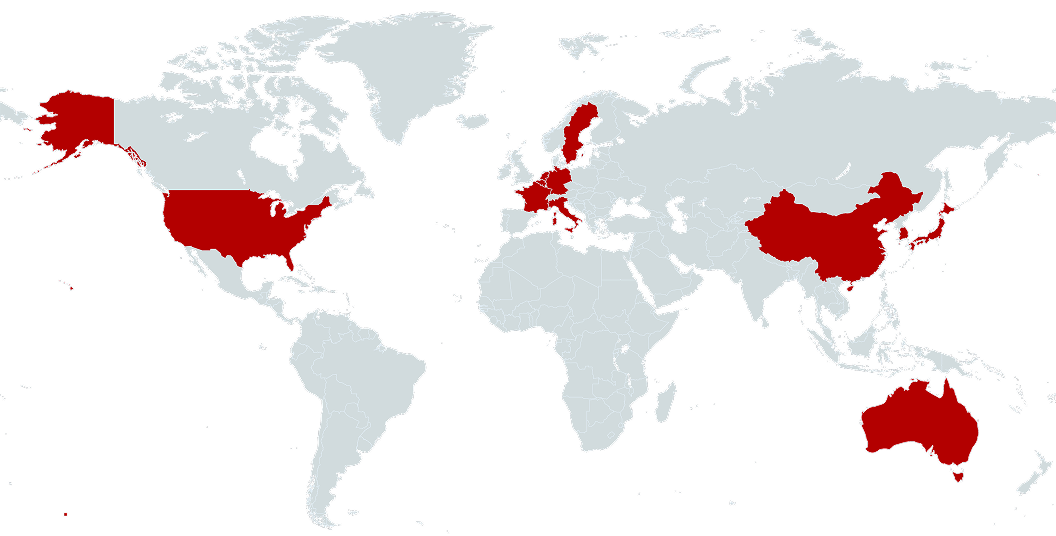
- 30+ — customers in Europe, the US, and Asia
- 20+ — employees with expertise in medical technology, simulation, image and data processing, software, and clinical practice
- 2,500+ — digital patient twins in the growing database
- US and Europe — granted patents for the automated assessment of device fitting on virtual patients
Why Virtonomy Exists
Medical devices are developed for real people—yet traditional testing and study methods capture the anatomical and demographic diversity of these people only to a limited extent. At the same time, the pressure on MedTech teams is growing to identify development risks earlier, meet regulatory requirements, and bring products to market faster.
In silico methods add a virtual layer to the traditional development process. They make it possible to investigate questions before another prototype is built, an animal study is carried out, or a patient is enrolled in a trial.
- Identify risks earlier: Anatomical fit or performance issues can be investigated well before the late and expensive phases of development.
- Represent patient diversity: Pediatric, female, geographically diverse, and anatomically extreme cases can be deliberately included in virtual cohorts.
- Prepare regulatory evidence: Models, simulations, and reports are built along established credibility and verification-and-validation principles.
- Use physical testing more deliberately: Virtual investigations can complement bench, animal, and human studies and—depending on the Context of Use and regulatory acceptance—reduce the scope of conventional testing and evidence.
What We Do: v-Patients
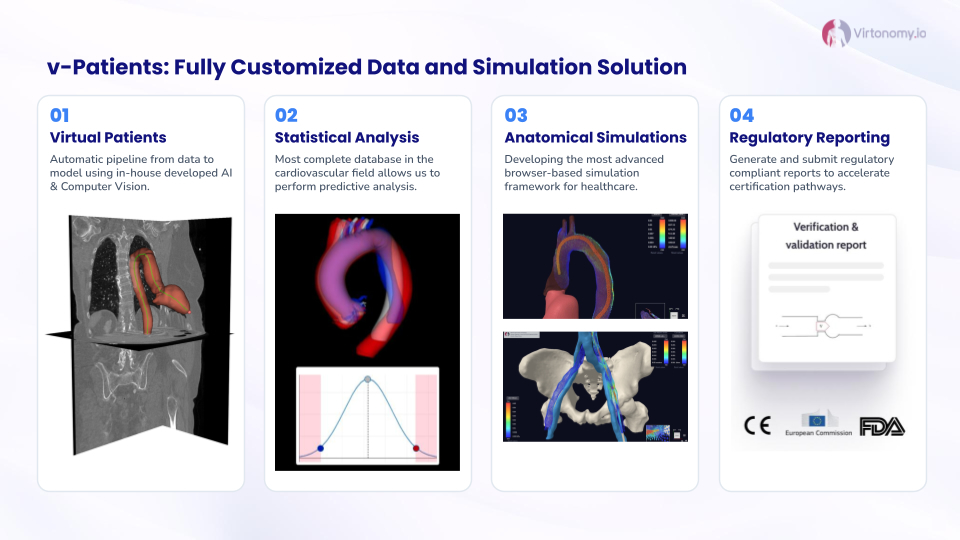
v-Patients is Virtonomy’s browser-based platform for digital patient twins and in silico studies in cardiovascular medical device development. It combines patient cohorts, 3D anatomy studies, virtual implantation, statistical analysis, and simulation in a single environment.
At its core is a growing database of more than 2,500 digital patient twins derived from clinical imaging data. What matters is not only the number but the variability: the cohorts span different age groups, sexes, pathologies, and geographic regions. Virtonomy collaborates with data partners, hospitals, and clinics to source the imaging data used to create the digital patient twins available on its platform.

From Patient Cohort to Virtual Evidence
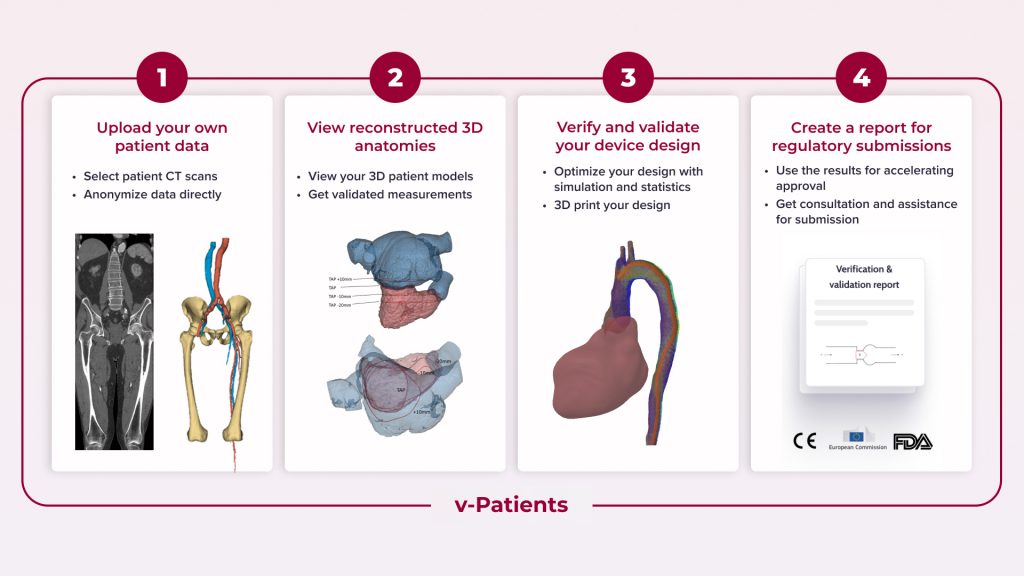
- Select a virtual cohort: Assemble patients by anatomy, pathology, age, sex, and project-specific criteria.
- Analyze anatomy: investigate precise 3D measurements, statistical population analyses, and average, worst-case, and edge-case scenarios.
- Implant the device virtually: Insert CAD models of your own medical device into digital patient twins and analyze anatomical fit collaboratively.
- Simulate interactions: Investigate interaction between the device and the anatomy, blood flow behavior, as well as virtual benchtop scenarios.
- Document results: Generate validated analyses and regulatory-oriented reports for development and submission processes.
The platform runs in the browser and in the cloud. Teams need no compute infrastructure of their own and do not have to build a dedicated simulation environment for every question. Virtonomy takes on the complexity of modeling, quality assurance, and simulation; customers steer the development and study questions.
Who We Work For
Virtonomy works with MedTech companies that want to develop cardiovascular medical devices faster, more efficiently, and with robust evidence. v-Patients helps development teams identify anatomical risks earlier, validate design decisions virtually, and integrate in silico evidence into development and approval programs.
Typical applications range from heart valves, stents, and catheters through cannulas and occluders to ventricular assist devices and total artificial hearts.

Proven Impact in Real-World Development Projects
Fatigue Evidence in Three Weeks Instead of Six Months
For a compassionate-use application to the German Federal Institute for Drugs and Medical Devices (BfArM), fatigue data for a medical device were missing. Virtonomy produced the fatigue simulation within a three-week submission window—instead of the roughly six months conventionally estimated. The simulation results supported the durability evidence for the application. On this basis, the procedure could move forward, leading to the successful first-in-human implantation of the device in Germany.
The detailed first-in-human case shows how Virtonomy produced the missing fatigue evidence within three weeks.
Virtual Implantation for RealHeart
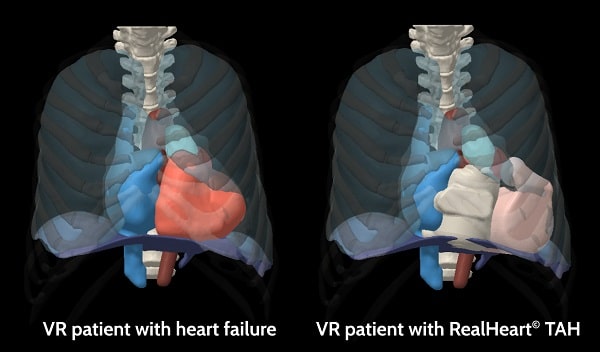
For RealHeart’s Total Artificial Heart, Virtonomy investigated anatomical fit and implantation scenarios in patient twins with severe heart failure. The results support product development, the selection of suitable patients, and the preparation of clinical trials. RealHeart CEO Ina Laura Perkins sums up the benefit: “We can experiment in a safe environment, which saves significant resources and reduces risks.”
The detailed customer success story shows how virtual implantations help RealHeart reduce prototyping effort and animal testing.

Customer Success Story: Developing a Total Artificial Heart with v-Patients
The v-Patients platform enabled Realheart to test and refine the TAH’s anatomical fit in virtual patient models, reducing the need for physical prototypes and animal studies. This innovative approach has saved time, resources, and costs by allowing precise adjustments in a virtual setting.
Regulatory Experience Is Part of the Platform
Computational models are becoming more relevant for regulatory decisions—and what matters is not the simulation alone but its credibility for a clearly defined Context of Use. Virtonomy aligns its modeling, verification, validation, and reporting processes with established regulatory frameworks, including the FDA guidance on assessing the credibility of computational modeling and simulation and the ASME V&V 40 standard.
Results generated using Virtonomy’s validated digital patient cohorts have already been considered by the FDA and European Notified Bodies as part of medical device submissions, demonstrating their use in real-world regulatory processes.
The detailed Virtonomy article explains what requirements the FDA places on computational evidence and how ASME V&V 40 fits in.
Regulatory Expertise Firsthand
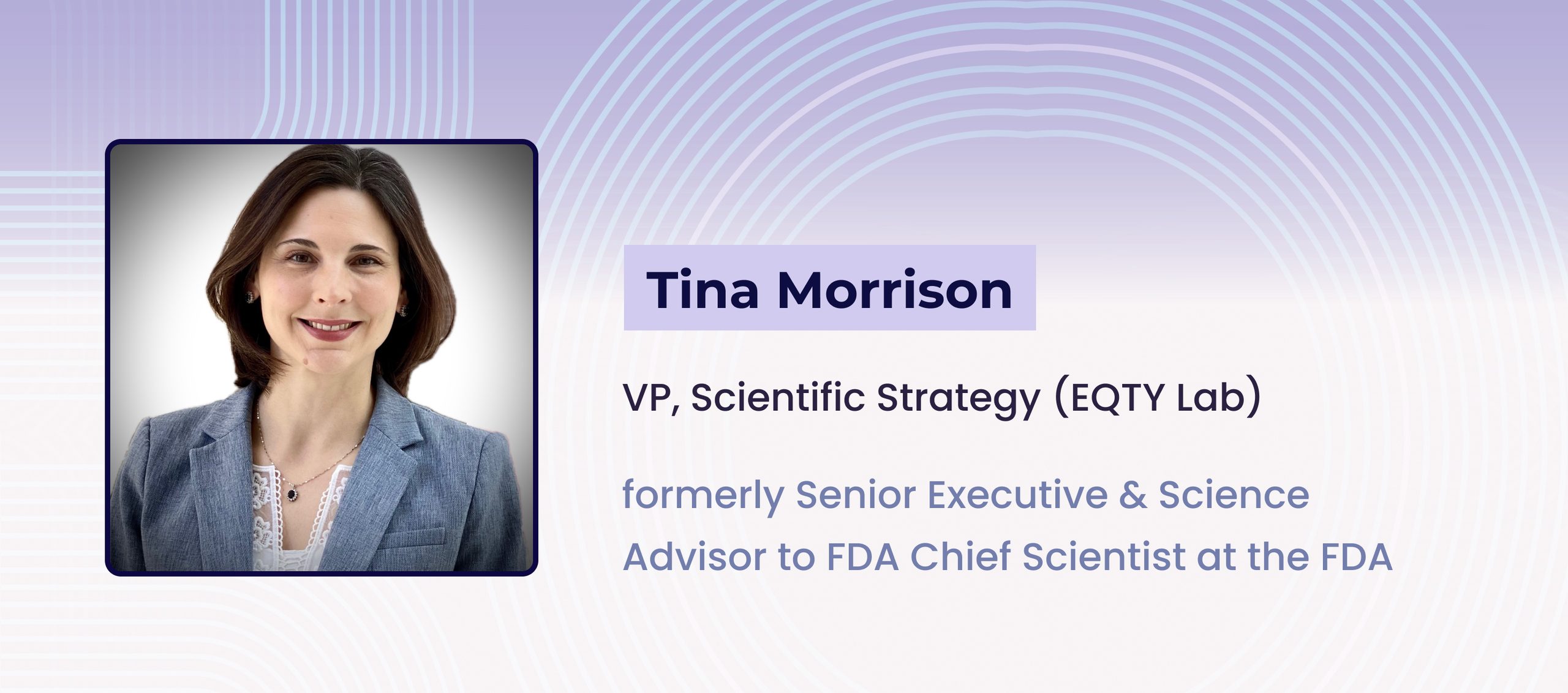
Dr. Tina Morrison advises Virtonomy on regulatory matters. She served for twelve years as a Medical Officer at the US FDA, led the FDA Modeling and Simulation Working Group, and was a driving force behind the development of methods for assessing the credibility of computational models—including the ASME V&V 40 standard.
CEO Dr. Simon J. Sonntag is also a task force lead in the Avicenna Alliance and contributes to international initiatives for the regulatory and scientific establishment of in silico methods, including the ISO 5840 working group.
Want us to help you draft a virtual testing plan?
Ask our regulatory experts to establish your virtual testing plan connected to your physical testing. We provide this service for free during a special workshop tailored to you. Learn about the new FDA guidance documents and ASME standards for Computational Modeling and Simulation. Our experts will highlight how you can apply them and streamline your regulatory process.
Patented Technology
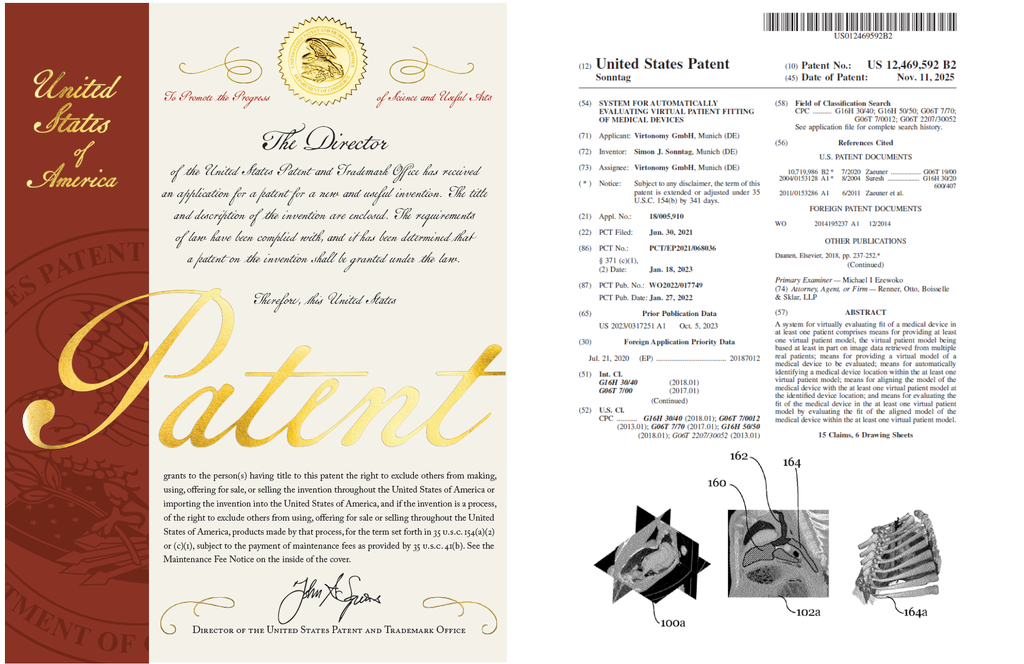
Virtonomy holds granted intellectual property rights in the US and Europe for the automated assessment of medical device fitting on virtual patients. The US patent US 12,469,592 B2 was granted in November 2025; the European patent EP 4 186 067 B1 in February 2026. In addition, Virtonomy maintains a further patent family around the collaborative analysis and visualization of virtual medical models.
Quality, Data Protection, and Scientific Standards
Virtonomy processes clinical imaging data according to clearly defined data protection and quality processes. Identifying information is removed from the datasets before further processing. The digital patient twins created from them are checked against the underlying CT or MRI imaging data; source data, segmentation, validation information, and version states remain transparently documented.
The clinical imaging data comes from collaborations with clinics, hospitals, and data partners under the respective required consent and data protection agreements. This approach is complemented by scientific collaborations and peer-reviewed publications on digital patient twins and in silico simulations.
The People Behind Virtonomy
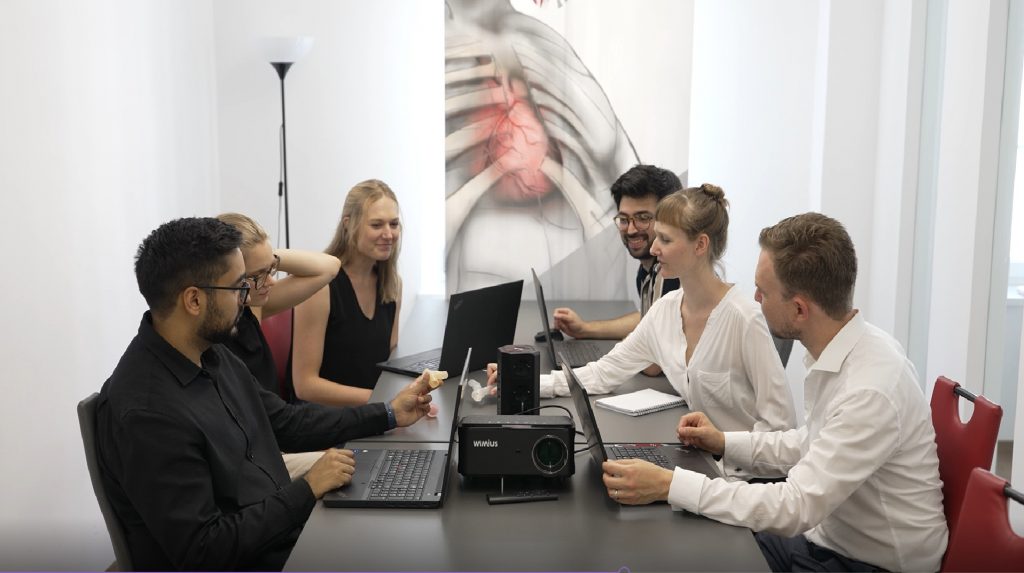
Virtonomy was founded in 2019 in Munich by Dr. Simon J. Sonntag and Wen-Yang Chu. Today, the team combines expertise in medical technology, cardiovascular engineering, medical image processing, AI and computer vision, simulation, software development, visualization, and clinical practice.
Dr. Simon J. Sonntag — CEO & Co-Founder
Simon Sonntag brings more than 15 years of experience in cardiovascular medical technology, computational simulation, and regulatory science. He earned his PhD in medical engineering at RWTH Aachen University and studied applied mathematics at TU Munich as well as biomedical engineering at the National University of Singapore. Before founding Virtonomy, he was, among other roles, COO at enmodes and a group leader at RWTH Aachen University.
As a task force lead in the Avicenna Alliance, a member of the Board of Governors of the European Society for Artificial Organs, and a contributor to the ISO 5840 working group, he works at the intersection of technology, medicine, and regulatory acceptance.
Further positions, contributions, and publications can be found in the detailed bio of Simon Sonntag.

Wen-Yang Chu — CTO & Co-Founder
Wen-Yang Chu is responsible for the technological development of Virtonomy and v-Patients. His focus areas are AI, computer vision, 3D image processing, and software architecture. Before Virtonomy, he worked at Philips Healthcare on computer vision and AI applications. Together with Simon Sonntag, he thus combines medical technology and regulatory know-how with the company’s technological platform expertise.

Dr. Tina Morrison — Strategic Advisor
As a former FDA Medical Officer and an expert on the credibility of computational modeling and simulation, Tina Morrison supports Virtonomy in regulatory science and in positioning digital evidence within approval processes.
Investors and Awards
In December 2025, Virtonomy closed a Series A financing round of more than 5 million euros. The largest share was contributed by investors via the investment platform Companisto, with around 3.3 million euros. Bayern Kapital invested an additional more than 2 million euros. Earlier investors include Accenture Ventures, DvH Ventures, Honeystone Ventures, Pace Ventures, UnternehmerTUM, and Plug and Play, among others.
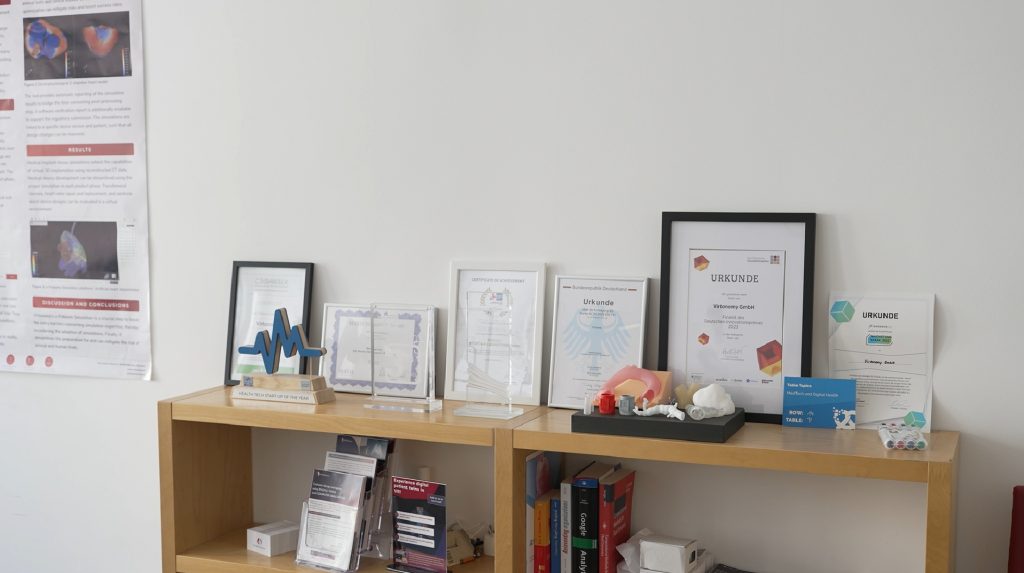
Virtonomy has been recognized as Health Tech Startup of the Year at the Med-Tech World Conference, reached the top 3 of the MEDICA Start-up Competition, and received the Innovator of Tomorrow award at the Weltmarktführer Innovation Day.

Further conferences, industry events, and public appearances can be found in our event overview.

Ready to cut your device development time and costs?
Would you like to explore where digital patient twins or in silico evidence can meaningfully fit into your development or approval program? Talk with the Virtonomy team about your Context of Use, the right virtual patient cohort, and a possible evidence pathway.