ASME V&V40 Compliance: A Step-by-Step Guide for Medical Device Manufacturers

In brief: ASME V&V40 is the standard for establishing that a computational model is credible enough to support a medical device decision. Compliance involves defining the question of interest and context of use, assessing model risk, setting credibility goals proportionate to that risk, generating the corresponding evidence, and documenting the

ASME V&V40 Compliance: A Step-by-Step Guide for Medical Device Manufacturers Read More »
The carbon cost of animal trials and how digital twins can help

The Carbon Cost of Animal Testing — And How Digital Twins Can Help

The medical device industry has long measured progress in years saved, lives improved, and regulatory hurdles cleared. But there is another metric that rarely appears on development dashboards: the carbon footprint of the testing process itself. When we talk about making healthcare more sustainable, the conversation usually focuses on hospitals,

The Carbon Cost of Animal Testing — And How Digital Twins Can Help Read More »

FDA in silico evidence user using v-Patients software

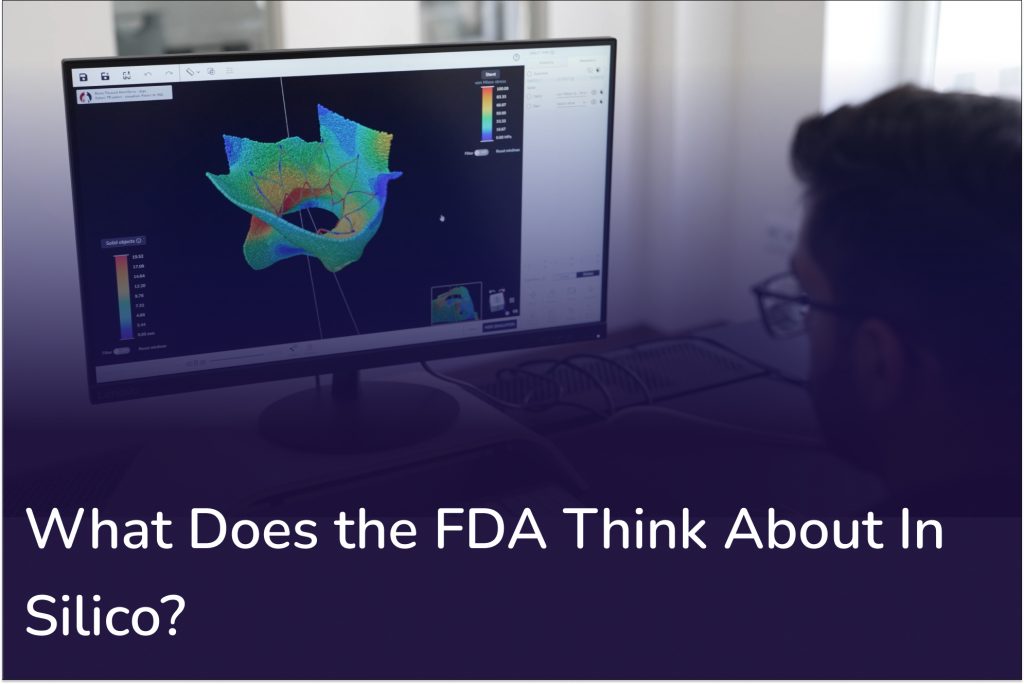
What Does the FDA Think About In Silico Evidence?

One of the most common questions we get and a question that keeps coming up in cardiovascular device development circles, in regulatory affairs meetings, and in conversations between engineers who have just run their first digital twin simulation is “Will the FDA actually accept this?” It’s a fair question. And

What Does the FDA Think About In Silico Evidence? Read More »

Accelerating In Silico Medical Innovation: Virtonomy Transforms Healthcare Simulation enabled by NVIDIA

The medical device industry faces many challenges and pressures to reduce development timelines, cut costs and navigate complex regulatory pathways. Traditional development approaches rely heavily on animal testing and extensive clinical trials – processes that can take years to complete and many iteration loops due to failed trials. With new,

Accelerating In Silico Medical Innovation: Virtonomy Transforms Healthcare Simulation enabled by NVIDIA Read More »

virtonomy webinar pediatric in silico data

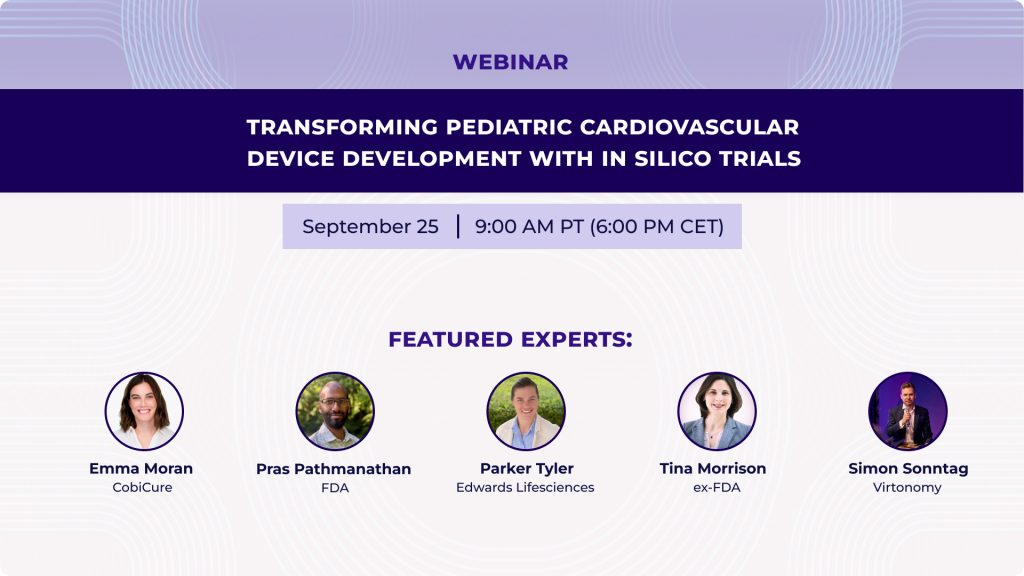
Webinar recording: Transforming Pediatric Cardiovascular Device Development with In Silico Trials

Pediatric cardiovascular medical device development faces a critical challenge: children are not just “small adults.” Their unique anatomies, rapid growth, and vulnerable physiology create hurdles that traditional research and testing methods struggle to overcome. Small patient populations, ethical limits on clinical trials, and high development costs leave most companies focusing

Webinar recording: Transforming Pediatric Cardiovascular Device Development with In Silico Trials Read More »

5 features in v-patients to help you design devices that fit more patients

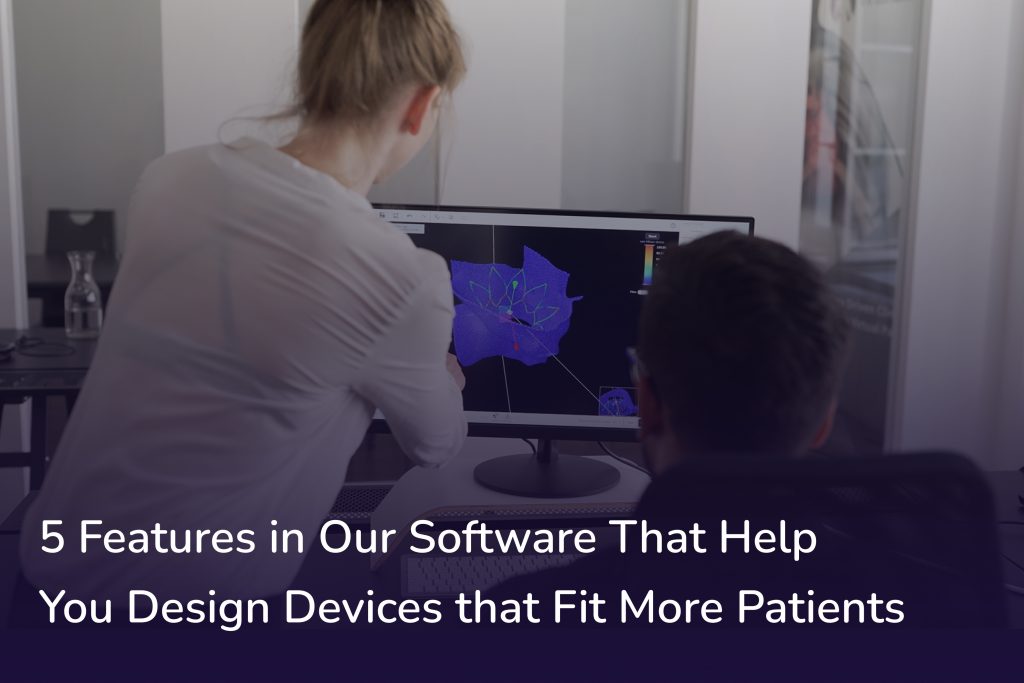
5 Features in v-Patients That Help You Design Devices that Fit More Patients

When One Size Doesn’t Fit All Medical devices should work for everyone—not just for a narrow group of patients. True inclusive medical device design means creating solutions that fit people across age, sex, size, and anatomy. Yet too often, devices are designed and tested on limited datasets, which can lead

5 Features in v-Patients That Help You Design Devices that Fit More Patients Read More »

Simon Sonntag showing digital twinning software v-Patients on computer

What to Expect When Working with Virtonomy: A Guide to Your Digital Twin Journey

Bringing digital twinning software into your medical device development process can seem complex at first. The technology might feel abstract, and introducing new software into your workflow may put you off. However, our team of experts makes sure you are guided through the whole process and can start using the

What to Expect When Working with Virtonomy: A Guide to Your Digital Twin Journey Read More »

a person working on computer with FDA logo on the screen

Debunking Myths: What’s Holding Back In Silico Innovation in Cardiovascular Devices

As regulatory frameworks evolve and digital health technologies advance, in silico methods like modeling, simulation, and virtual clinical trials are increasingly positioned to transform cardiovascular device development. In silico clinical trials for cardiovascular devices are high on the list of priorities for regulators such as FDA. Still, despite clear advantages,

Debunking Myths: What’s Holding Back In Silico Innovation in Cardiovascular Devices Read More »

How Digital Twins Are Transforming Healthcare

Key Insights from the Digital.Health Webinar Digital twin technology is rapidly reshaping the healthcare landscape, offering new ways to optimize medical treatments, device development, and patient care. In a recent Digital.Health webinar, industry experts, including Ami Bhatt (Chief Innovation Officer at American College of Cardiology), Simon Sonntag (Co-Founder & CEO

How Digital Twins Are Transforming Healthcare Read More »

Customer Success Story: Developing a Total Artificial Heart (TAH) with v-Patients

Read our interview with Pinja Ojanen, Research Nurse at Scandinavian Realheart. Since 2019, Scandinavian Realheart has partnered with Virtonomy, using the v-Patients software to develop their Total Artificial Heart (TAH) for patients with severe heart failure. The v-Patients platform enables Realheart to test and refine the TAH’s anatomical fit in

Customer Success Story: Developing a Total Artificial Heart (TAH) with v-Patients Read More »

Scroll to Top
Scroll to Top