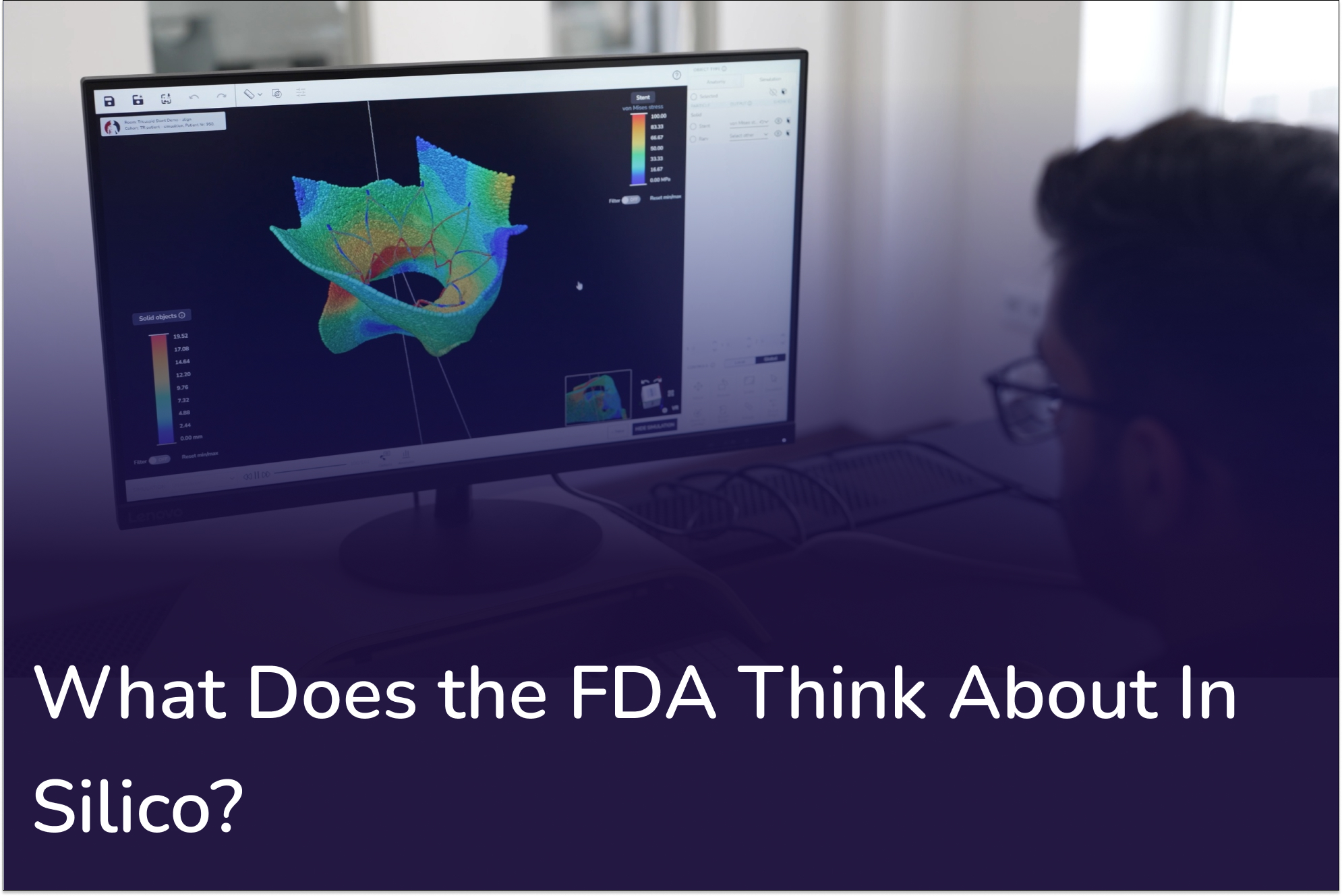
One of the most common questions we get and a question that keeps coming up in cardiovascular device development circles, in regulatory affairs meetings, and in conversations between engineers who have just run their first digital twin simulation is “Will the FDA actually accept this?”
It’s a fair question. And the answer is clear: yes, and the regulatory framework supporting it has never been stronger. The more important question now is how to use it most effectively.
Current sentiments among medical device developers
In silico methods promise many things. The ability to simulate device performance across thousands of virtual patients, test implantation in rare anatomical conditions, and generate regulatory-grade evidence without a single animal study or costly clinical trial iteration. It represents a fundamental shift in how medical devices are developed.
But not everyone is fully on board yet. For many development teams, there is still a doubt: regulators have spent decades evaluating bench test, animal trials, and clinical trial data. How willing are they really to embrace in silico methods?
The gap between how developers perceive in silico acceptance and where regulators stand is one of the big challenges and tasks that we want to tackle and eliminate.
Where the FDA actually stands
The FDA’s position on computational modeling and simulation has been evolving for years, and the direction is by now very clear. Few people are better positioned to describe the direction than Dr. Tina Morrison — a 12-year FDA Medical Officer, former chair of the FDA Modeling and Simulation working group. Additionally, Tina has led the development of pathways for enhancing modeling credibility and acceptance. For instance, she led the development of the Verification and Validation standard for ASME, which culminated in 2018 with the first-ever set of evaluating procedures for computational modeling of medical devices, the ASME V&V 40 standard. She is now an advisor to Virtonomy.
Her view on where this is heading is clear:
“I believe it will become mandatory to use whatever state-of-the-art simulation is available at the time to rigorously assess every possible safety aspect we can.”
– TIna Morrisson, in podcast “The Digital Twin Theory”, full interview available here
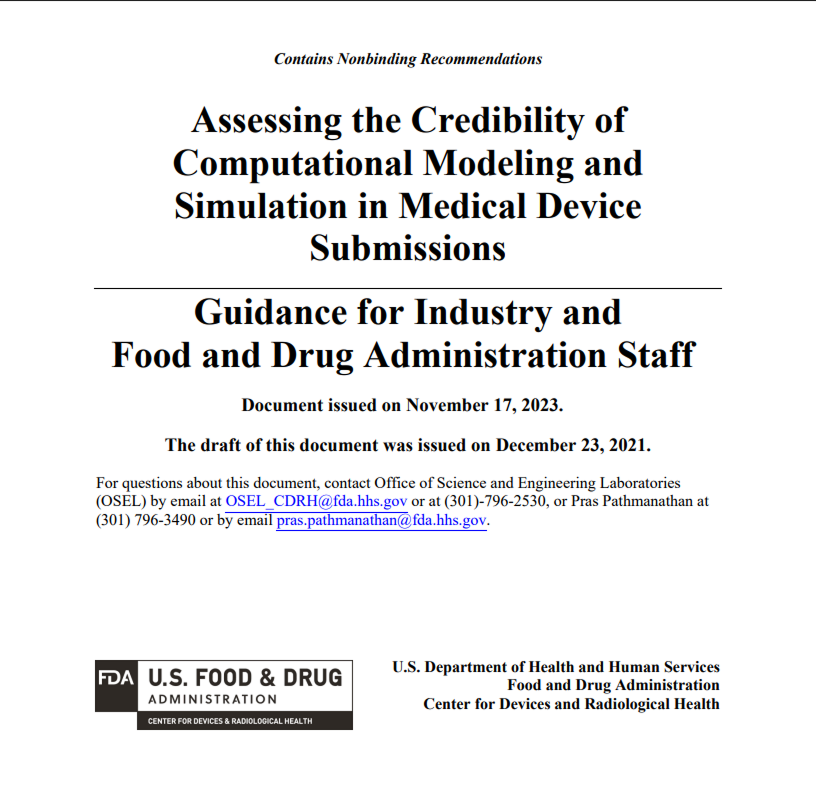
FDA has publicly committed significant resources to transforming computational modeling from a valuable scientific tool into a recognized regulatory one, explicitly citing the potential for substantial cost savings and the ability to evaluate device performance under conditions that physical testing simply cannot replicate.
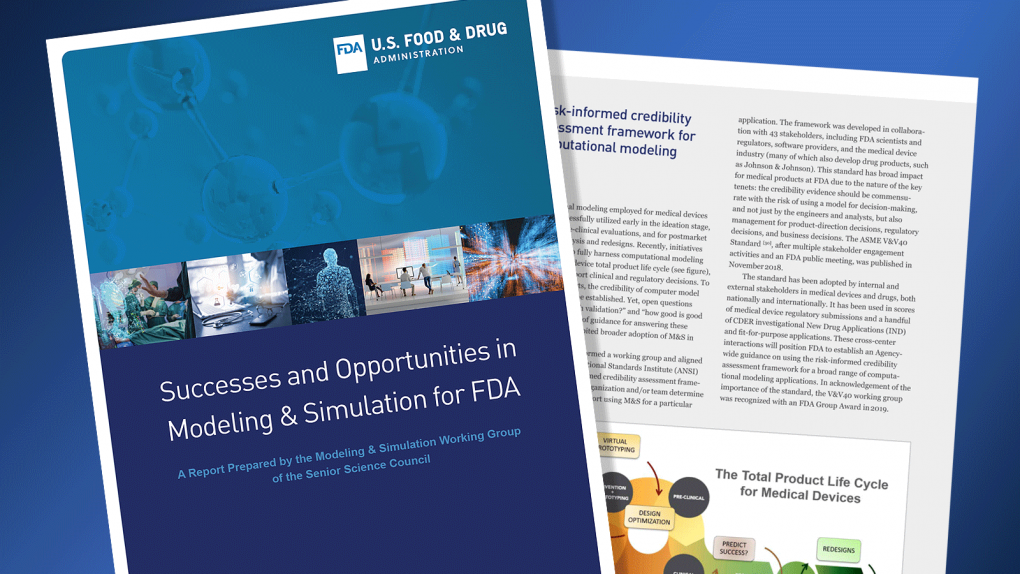
That commitment has translated into concrete frameworks. The ASME V&V40 standard — which Dr. Morrison herself led the development of — defines how computational models in medical device applications should be validated and is now a recognized benchmark for submissions. ISO compliance requirements provide further structure, and the FDA has established clear guidance on credibility planning, encouraging developers to engage early through pre-submission channels to align on modeling strategies before a full application is filed.
In Europe, the European Commission has moved in the same direction. The EU has formally recognized the benefits of in silico medicine, citing its potential to accelerate innovation while improving patient safety outcomes. A directive actively pushing to replace animal research with computational alternatives has added significant legislative weight to that position.
The policy foundation, in other words, is solid. Regulators are already convinced how valuable in silico methods are, and are actively building the infrastructure to make in silico evidence a standard part of the submission landscape.
From Simulation to Regulatory Evidence — Getting It Right
Understanding that the FDA accepts computational modeling is one thing. Knowing how to translate that into a submission is where experience and expertise make the difference. As Dr. Morrison herself has described from her time inside the agency:
“From our side at the FDA, the key was not just how the different companies were using simulations, but how we could ensure that what they were giving to us was good enough to be considered regulatory evidence.”
– TIna Morrisson, in podcast “The Digital Twin Theory”, full interview available here
Applying the frameworks correctly means knowing how much validation is appropriate for a given context of use, when and how to engage the FDA proactively, and how to structure documentation in the way reviewers expect to see it. Getting these details right is what separates a submission that moves smoothly through the process from one that requires additional rounds of clarification.
This is exactly the part where the right partner adds the most value.
How Virtonomy Helps You Get There
Virtonomy was built specifically for this intersection of computational science and regulatory reality. Over more than six years working exclusively in cardiovascular device development, we have not just built a simulation platform — we have built a methodology that is already accepted by both the FDA and EU regulatory bodies as valid digital evidence. This acceptance is the result of years of rigorous validation work, active engagement with evolving regulatory frameworks, and a platform designed from the ground up with submission requirements at its core.
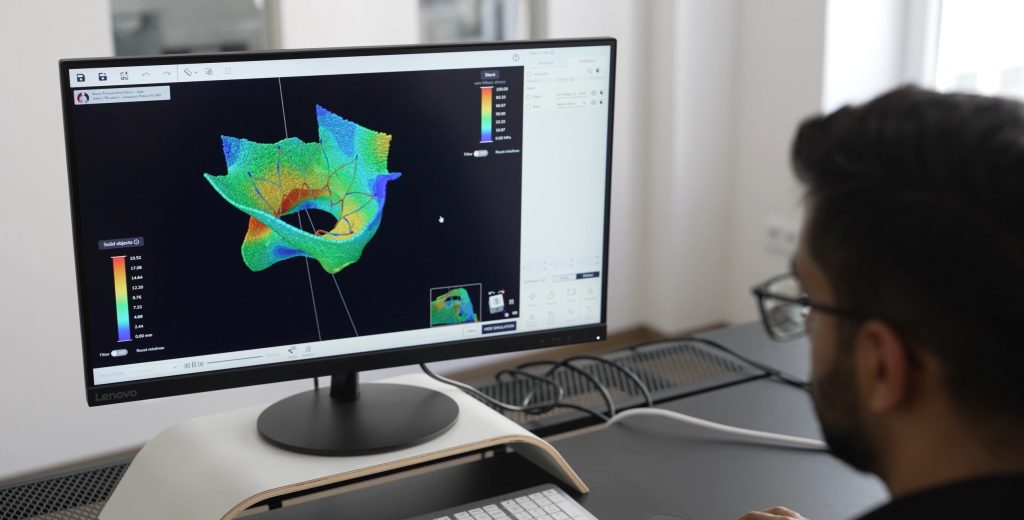
Our methods are validated against ASME V&V40 and are fully ISO compliant, not as an afterthought, but as a foundational design principle. When a customer uses Virtonomy to generate in silico evidence, they are working within a framework that regulators already recognize and accept.
Beyond the platform itself, it is the in-house expertise that sets the work apart. Our team combines specialists who understand not just how to run simulations, but how to structure the evidence, document the methodology, and anticipate the questions a reviewer is likely to ask.
For teams looking to move confidently through the FDA or EU submission process with in silico evidence, that combination of a regulatorily accepted platform, deep in-house expertise, and direct access to one of the people who helped write the rulebook is what turns a strong simulation study into a submission that holds up under review.
Take the Next Step
We offer a free regulatory consultation workshop where our experts work directly with your team to establish a virtual testing plan connected to your physical testing strategy — tailored to your device, your therapeutic area, and the applicable FDA and EU guidance documents.