


Cardiovascular Device Use Cases: Digital Twin Simulation Across Device Categories
Explore real-world digital twins use-cases and how v-Patients streamlines development, reduces risk, and brings products to market faster.

Tricuspid Valve Replacement Simulation
Simulating tricuspid valve replacement with virtual patients enabled a device team to analyze anatomical fit and function without a single animal trial.

Cardiac Catheter Design Optimization
A catheter concept and implantation strategy was refined through medical simulation on 3D patient anatomies, reducing design iterations and time-to-bench.

In-Silico Aortic Valve Bench Test
Digital twins enabled benchtop testing of an aortic valve concept in a fraction of the time, helping validate performance under real-world conditions.
Teams developing cardiovascular medical devices need in silico methods tailored to the specific device category and its context of use. Developing a transcatheter aortic valve device involves different simulation requirements than a coronary stent or a cardiac catheter. A generic simulation approach rarely does justice to these differing requirements equally.
Across these use cases, v-Patients shortens iteration cycles from months to weeks and reduces the effort required for physical prototypes. At the same time, medical devices can be evaluated on diverse patient populations, including children, women, and ethnic groups that are often underrepresented in clinical trials.
This page organizes the v-Patients use cases by cardiovascular device category. This helps development teams recognize where the platform fits into their development process. Each card leads to a detailed use case with clinical context, methodology, and results.
Structural Heart Interventions
Digital patient twins make it possible to simulate devices for valve replacement and other structural heart interventions on a range of patient anatomies, including pediatric and underrepresented adult populations. The following use cases show how MedTech teams use v-Patients to develop such devices—from tricuspid valve replacement through TAVI/TAVR to testing of aortic valve prostheses in accordance with ISO 5840-1:2021.
Tricuspid Valve Replacement (TTVR) Simulation
Simulate tricuspid valve replacement (TTVR) and deployment on a range of patient anatomies to evaluate anatomical fit and implantation strategy before manufacturing physical prototypes. This makes it possible to shorten design iterations from months to weeks and reduce the number of prototyping cycles required. Perform a full fatigue assessment to understand the durability of the stent over many cardiac cycles.
Improved procedural planning
Reduced reliance on trial-and-error
Enhanced confidence before first in-human studies
Transcatheter Implantation Simulation (Sheath Insertion Simulation)
Model the transcatheter implantation or sheath insertion into a femoral artery, following clinical practice. Evaluate catheter size selection, positioning, and implant behavior across the target population before further bench tests, pre-clinical investigations, or clinical trials are carried out. Measure the stresses and strains to evaluate potential damage areas.
Reduced R&D time
Minimized costs
Ensured the catheter design could adapt across real-world anatomical variation
Aortic Valve Testing per ISO 5840
Reproduce ISO 5840-1-aligned benchtop testing of aortic valve in a virtual environment using simulation. Investigate function and durability across multiple cycles, complementing physical bench testing with patient-specific anatomical variability. Virtual benchtop testing can be used to provide a more comprehensive fluid flow analysis than traditional benchtop.
Delivered preclinical evidence faster
Avoided variability from physical setups
Replace benchtop testing with simulation
Vascular Interventions
Digital patient twins support the development and optimization of devices that are navigated through or implanted in vascular anatomies. Analyzing catheter paths and simulating stent deployment and expansion are two typical applications. This enables development teams to investigate how their devices behave across a range of digital patient anatomies before manufacturing further physical prototypes.
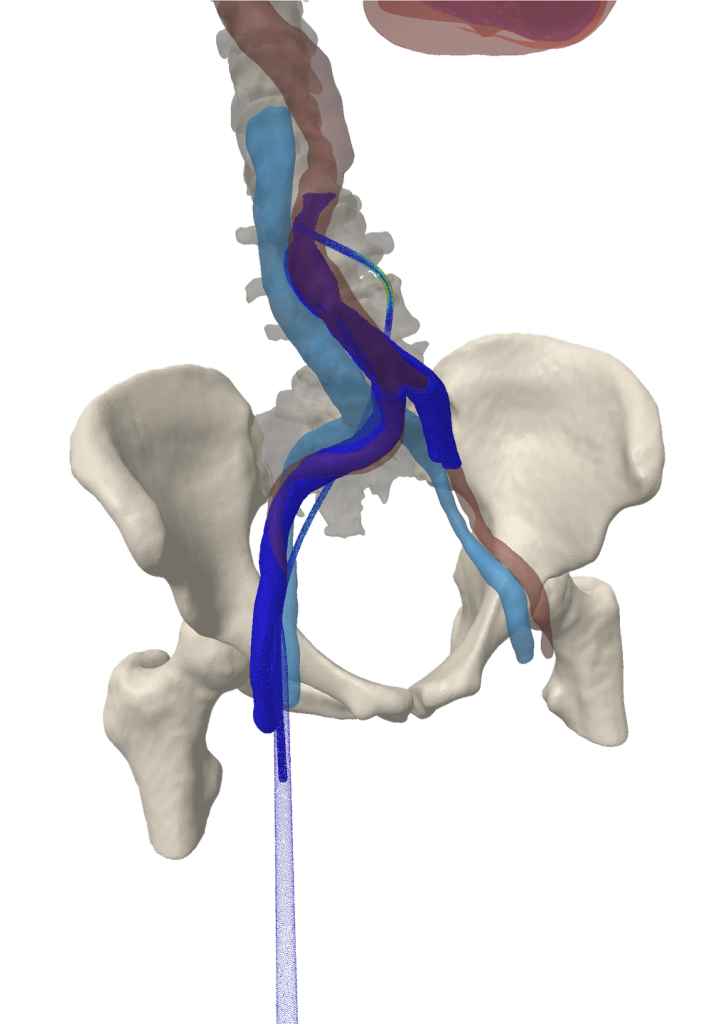
Optimizing Cardiac Catheter Designs
Test and optimize cardiac catheter designs on hundreds of digital patient anatomies. Investigate navigation paths, catheter tip positioning, and contact points with the vessel wall before further physical prototypes are manufactured.
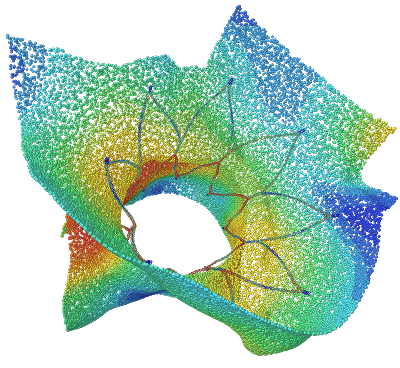
Stent Deployment and Expansion Simulation
Simulate the deployment and expansion of stents in virtual patient anatomies that reproduce the vessel geometry of the target population. Shorten iteration cycles and identify potential design issues before further physical prototypes become necessary.

Talk to Us About Your Development Project
v-Patients supports the development of cardiovascular medical devices for valve replacement, structural heart interventions, and vascular applications—from the early design phase to regulatory preparation. New use cases are added as MedTech partners investigate further device categories on the platform. With pre-operative planning, the same digital twin technology can also be applied beyond research and development to clinical use.
FAQ
Which categories of cardiovascular medical devices does v-Patients support?
v-Patients currently supports applications for structural heart interventions, including tricuspid valve replacement and TAVI/TAVR, as well as vascular applications such as cardiac catheters and stents. Each use case is based on digital patient cohorts tailored to the anatomical requirements of the respective device category. New categories are added as MedTech partners investigate further devices on the platform.
How can digital patient twins be integrated into cardiovascular medical device development?
Digital patient twins can be used across the entire development cycle of a medical device and are not limited to a single phase. Teams use v-Patients in the early concept and design phase, during prototype development, and in pre-clinical evaluation to investigate device concepts and their behavior across a range of anatomies. Depending on the defined Context of Use, the platform can also support regulatory evidence generation and post-market investigations.
Can v-Patients simulate devices that are not yet on the market?
Yes. v-Patients makes it possible to investigate early device concepts before they reach the market. Teams upload their own CAD models of the device and test them on digital patient cohorts with a range of anatomies, including populations that are difficult to represent in pre-clinical or clinical investigations. This makes it possible to evaluate design decisions before further physical prototypes are created.
Do the FDA and EU Notified Bodies accept in silico evidence for cardiovascular medical devices?
Both FDA submissions and clinical evaluations under the EU Medical Device Regulation (EU MDR) can incorporate in silico evidence. The FDA provides guidance on the credibility of computational modeling and simulation, while computational evidence can also contribute to the clinical evaluation under the EU MDR. Acceptance depends on the credibility of the model, the defined Context of Use, and appropriate verification and validation following frameworks such as ASME V&V 40.
Can I test my device with my own patient data?
Yes. Customers can upload their own CT imaging data in DICOM format to investigate their device on patient-specific anatomies or on a custom patient cohort. Virtonomy’s Data & AI team anonymizes and segments the imaging data and creates digital patient twins from it for simulation. This is how v-Patients connects customer-specific imaging data and simulation in a seamless, end-to-end workflow.